
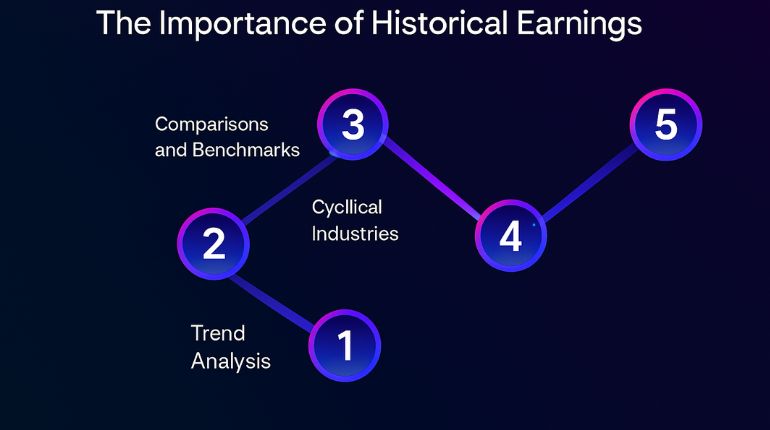
The Importance of Historical Earnings in Business Valuation
In the world of business valuation, understanding a company’s past financial performance is crucial for estimating its current value and predicting its future potential. One of the key metrics that valuation experts rely on is historical earnings – the profits or losses a company has generated over time. These earnings are more than just numbers on a financial statement; they offer valuable insights into the company’s operational efficiency, business model sustainability, and potential for future growth. Historical earnings serve as a crucial cornerstone in the realm of business valuation, providing valuable insights into a company’s past financial performance and stability. By examining a company’s historical earnings data, analysts and investors can derive meaningful trends, assess profitability, and make informed decisions regarding the company’s value.
In this blog, we will delve into the importance of historical earnings in business valuation, why they matter, and how they influence different valuation methods. Additionally, we will provide examples of how historical earnings data is used to assess business value accurately.
Understanding Historical Earnings in Business Valuation
Historical earnings play a pivotal role in assessing the financial health and worth of a business. By analyzing a company’s past performance, investors and analysts can make informed decisions about its future potential and value.
Historical earnings refer to a company’s past profits and financial performance over a specific period. It includes revenue, expenses, and net income, providing a snapshot of how well the business has performed in the past. Accurate financial reporting is crucial for understanding historical earnings. Transparent and reliable financial statements ensure that investors have a clear picture of a company’s past performance, enabling them to gauge its stability and growth prospects accurately.
Foundation for Forecasting Future Performance
Historical earnings are often used as a foundation for projecting future financial performance. When valuing a business, historical earnings provide a benchmark for analysts and investors to understand past trends, which can help forecast how the company might perform moving forward. For example, consistent revenue and profit growth over the past five years may indicate that the business is well-positioned for future success. Conversely, a company with declining earnings could signal operational issues or market challenges that need to be addressed.
Example: Consider a manufacturing company that has shown consistent annual revenue growth of 8% over the past five years. Based on this track record, an investor might expect the company to continue experiencing stable growth in the future, which would influence the valuation using income-based methods, such as the Discounted Cash Flow (DCF) model.
Assessing the Company’s Stability and Profitability
One of the primary reasons historical earnings are vital in business valuation is that they provide insight into the stability and profitability of a company. Stable and predictable earnings typically suggest that the business has a sustainable competitive advantage, well-established customer relationships, or an effective operational model.
By analyzing historical earnings, valuators can assess the company’s ability to weather economic cycles, industry disruptions, and market fluctuations. Consistently strong earnings over time suggest that the company has sound management practices and resilient business operations.
Example: A technology company that has maintained strong earnings year after year despite changing market conditions may be seen as a strong investment because it has demonstrated resilience and the ability to adapt to new challenges. Conversely, if the company’s earnings were sporadic or highly dependent on a single product, the valuation might reflect a higher level of risk.
Refining Valuation Accuracy with Historical Earnings
Historical earnings data play an integral role in refining the accuracy of different valuation methods. In methods such as Capitalization of Earnings or Income Approach, past earnings are normalized to account for one-time gains or non-recurring expenses.
Example: Capitalization of Earnings Method
If a company’s historical earnings are $15 million but it has an extraordinary gain of $2 million from asset sales, analysts would normalize the earnings by excluding this one-time event. The adjusted earnings for valuation purposes would be:
Normalized Earnings=15,000,000−2,000,000=13,000,000
By using normalized earnings, analysts avoid overestimating the company’s value based on non-recurring events, providing a more realistic picture of its ongoing earning capacity.
Benchmarking Against Industry Peers
Historical earnings are also crucial for benchmarking a company’s performance against industry peers. By comparing a company’s earnings trends with others in the same sector, analysts can determine whether the company is outperforming or underperforming relative to the market.
Example: Earnings Comparison in the Retail Sector
Consider two retail companies: Company A and Company B. Company A has shown consistent revenue growth of 5% per year, while Company B’s revenue growth has been erratic, varying between -3% and 12% over the last 5 years. When valuing these companies, analysts might apply a price-to-earnings (P/E) ratio for each business:
- Company A’s P/E Ratio: 15x (indicating a relatively stable, predictable business model)
- Company B’s P/E Ratio: 12x (reflecting higher risk and volatility in earnings)
Thus, Company A’s stable earnings could lead to a higher valuation multiple, suggesting a premium over Company B, despite similar nominal revenue figures.
The Significance of Historical Earning Trends in Business Valuation
- Identifying Profitability Patterns Over Time: One of the most important aspects of historical earnings trends is their ability to highlight a company’s profitability patterns over time. By examining past earnings, valuation professionals can assess whether a company has been consistently profitable, or if its earnings have fluctuated significantly due to market conditions, operational issues, or one-time events.
- Stable Earnings Growth: If a company shows consistent growth in earnings over several years, it suggests a strong, sustainable business model and effective management practices. This signals to potential investors that the business has the ability to generate predictable future cash flows.
Erratic Earnings:
On the other hand, if the earnings show significant fluctuations or volatility, it may raise concerns about the stability of the company. For instance, a company that only generates significant earnings in specific seasons or is highly dependent on a single customer might face risks that could affect future profitability.
Forecasting Future Earnings and Cash Flows:
Historical earnings trends provide an essential benchmark for forecasting future performance. Valuation experts often rely on past earnings data as a basis for projecting future revenues, profits, and cash flows. A clear upward or downward trajectory in earnings can offer insights into how a company might perform in the coming years, influencing the discount rate in models like Discounted Cash Flow (DCF).
Trend Analysis:
By evaluating the company’s historical earnings trend, analysts can estimate growth rates for the future. For example, if a business has consistently grown its earnings by 5% annually, it’s reasonable to project similar growth in the near term, assuming no significant market disruptions or internal challenges.
Evaluating Business Resilience and Risk:
The ability of a company to withstand external shocks and economic downturns is reflected in its historical earnings resilience. If a company has maintained profitability even during periods of market downturns or external challenges (such as increased competition, regulatory changes, or economic recessions), this suggests strong business fundamentals and good risk management. On the other hand, earnings declines during tough times can indicate vulnerabilities.
Understanding the Impact of Seasonal and Cyclical Factors:
For businesses in seasonal or cyclical industries, historical earnings trends are essential for understanding the impact of external factors on their financial performance. Analyzing earnings over multiple cycles can help identify predictable patterns and the timing of peak and trough periods in a company’s financial performance.
Example: A retail chain might earn $50 million in the fourth quarter of the year but only $10 million in the first quarter. For valuation, analysts could adjust these figures to create an annualized figure, averaging earnings over a full year to avoid overestimating the value based on a peak period.
Conclusion
Historical earnings are a vital component of any business valuation process. They provide an essential foundation for assessing a company’s financial stability, profitability, and growth potential. By examining past performance, valuation professionals can make more accurate forecasts about future earnings, identify risks, and better understand how the business compares to industry peers.
Incorporating historical earnings into valuation models like the Discounted Cash Flow (DCF) or Capitalization of Earnings helps improve the reliability and accuracy of the final valuation. Additionally, these earnings offer insights into a company’s ability to generate sustainable cash flows, which is a key factor for investors and potential buyers when making informed decisions.
By carefully analyzing a business’s historical earnings data, valuation experts ensure that the final valuation reflects the true worth of the company—both in terms of its historical performance and future prospects. This process provides key insights to investors, business owners, and stakeholders looking to make well-informed decisions about the future of their businesses.
How Outsourcing Can Benefit Businesses in Historical Earnings Analysis
In today’s fast-paced business environment, companies face increasing pressure to optimize their operations and make data-driven decisions. This is especially true when it comes to understanding the financial performance and stability of a business. Analyzing historical earnings plays a crucial role in determining a company’s value, and outsourcing this process can significantly enhance the accuracy and efficiency of the valuation.
Outsourcing to a specialized Knowledge Process Outsourcing (KPO) like Synpact Consulting firm like offers several advantages. First, it allows businesses to tap into the expertise of financial analysts and valuation professionals who have the necessary skills and experience to interpret complex financial data. These professionals are well-versed in utilizing advanced tools and methodologies to assess historical earnings, ensuring a more accurate and reliable valuation.
Additionally, outsourcing can bring substantial cost efficiency. Hiring in-house teams with the required expertise can be expensive, especially for small and medium-sized businesses. By outsourcing, businesses can leverage a highly skilled workforce at a fraction of the cost, allowing them to allocate resources more effectively to other critical areas of their operations.
Outsourcing also offers scalability. As business needs evolve, KPO firms can quickly adapt to changing requirements, providing flexible solutions that align with the company’s growth trajectory. Whether it’s analyzing a larger volume of data or applying more sophisticated valuation models, outsourcing enables companies to scale their efforts without the need for significant internal investments.
By outsourcing the historical earnings analysis and valuation process, businesses not only gain access to top-tier expertise and support but also ensure that they are equipped with precise, data-driven insights that can guide decision-making and strategic planning. This approach ensures that business owners, investors, and stakeholders are confident in the valuations they rely on.