
The Role of Business Valuation in Estate Planning and Inheritance Tax
Estate planning plays a crucial role in financial management, ensuring that assets are distributed according to one’s wishes after death. One of the most critical aspects of estate planning, especially for business owners, is understanding the value of the business itself. Whether you own a small family business or a large enterprise, accurately assessing the value of your business plays a pivotal role in minimizing tax liabilities and ensuring smooth inheritance processes. This is where business valuation comes into play. By levelling the playing field and ensuring a fair assessment of assets, understanding the significance of accurate valuation becomes essential in both relieving financial strain and preserving family legacies.
Understanding Estate Planning
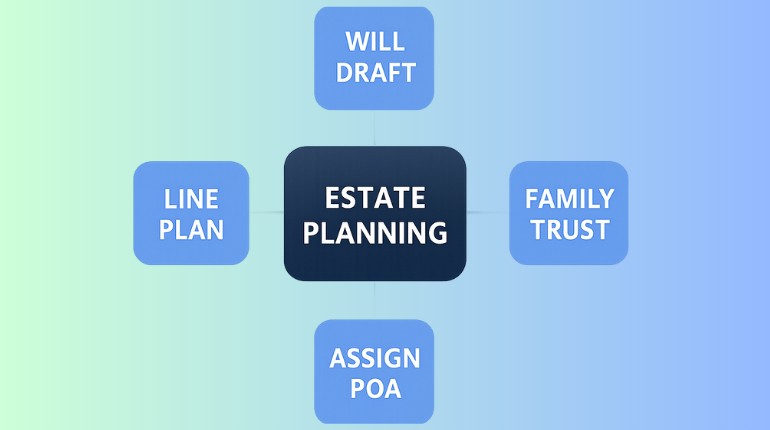
Estate planning is the process of organizing and managing an individual’s assets during their lifetime and ensuring their distribution according to their wishes after death. The goal of estate planning is to minimize taxes, avoid probate, ensure a smooth transition of assets, and provide for loved ones. It typically involves several legal, financial, and personal steps to make sure an individual’s estate is handled in the most efficient way possible after their passing.
Why Business Valuation is Essential in Estate Planning?
In the context of estate planning, the value of a business impacts several areas, including the division of assets, tax implications, and the smooth transition of ownership. Here are a few key reasons why business valuation is essential:
Accurate Asset Allocation:
Business owners often have a significant portion of their wealth tied up in their business. Without an accurate valuation, the estate may not be divided equitably among heirs. For instance, if one heir (a person who legally entitled) is interested in taking over the business, the others may need to be compensated with other assets. A precise valuation ensures that the estate planner has a clear understanding of the business’s worth and can plan the distribution accordingly.
Mitigating Estate Taxes:
In many jurisdictions, estates are subject to inheritance or estate taxes based on the total value of the estate. For individuals with significant business holdings, this can lead to a substantial tax burden. A professional business valuation can help identify tax-saving strategies, such as gifting shares of the business over time or setting up trusts. A well-conducted valuation can also help ensure that the tax burden does not lead to forced liquidation of the business, which could harm its long-term viability.
Smooth Transition of Ownership:
For family-owned businesses, a smooth transition of ownership is critical to maintaining the legacy and continuity of the business. An up-to-date business valuation helps to establish a fair and agreed-upon transfer price for heirs or outside buyers. Furthermore, understanding the business’s value can inform succession planning, where the roles and responsibilities of heirs are clearly defined based on their capabilities and interests in the company.
Providing Clarity in Divorce or Dispute Settlements:
In the event of a divorce or dispute, an accurate business valuation can prevent complications and provide a fair assessment of ownership stakes. A comprehensive valuation allows for clarity when negotiating asset division, avoiding prolonged conflicts that may harm both the personal and professional aspects of a business
Understanding Inheritance Tax
Understanding Inheritance Tax is vital when it comes to proper valuation. Inheritance Tax is a tax imposed on the transfer of assets from one person to another after death. It varies in different countries, but generally, the value of the assets being inherited determines the amount of tax owed. This includes various assets such as property, investments, and business interests.
Having a clear understanding of the tax rules and regulations surrounding Inheritance Tax is important in order to accurately value the assets. This ensures that the estate is not over or under-valued, avoiding unnecessary tax burdens or penalties. Professional advice and consultation with estate planners and tax advisors can help provide guidance on the valuation process and help optimize the tax planning strategies.
How Business Valuation Affects Inheritance Tax?
Inheritance taxes, also known as estate taxes, are applied to the transfer of assets after an individual passes away. The rate of taxation depends on the total value of the estate, and business holdings often make up a large portion of the taxable estate. In many countries, the tax code includes specific exemptions or reductions for businesses, particularly for small or family-owned businesses. However, these exemptions typically require a well-documented valuation.
Tax-Free Allowances and Deductions:
In certain jurisdictions, there are special provisions for small businesses or family-owned enterprises. For example, businesses may qualify for reduced estate tax rates or may be eligible for tax-free allowances if the business is transferred to heirs who actively participate in its operations. The key to benefiting from these provisions is having an up-to-date, accurate business valuation.
Estate Liquidity:
One of the primary challenges when it comes to business ownership and estate taxes is liquidity. Business owners may face the dilemma of paying estate taxes while preserving the business. A proper valuation helps identify whether the estate has enough liquidity to cover taxes without forcing the sale of the business. In some cases, estate planning tools like life insurance or instalment payment options may help mitigate this issue.
Gift and Succession Planning:
Business valuation is also instrumental in succession planning. Gifting shares of the business to heirs during the owner’s lifetime can significantly reduce the taxable value of the estate upon death. However, gifting requires a fair market valuation to ensure that the process is done in compliance with tax laws. Additionally, some businesses may opt for selling a portion of the company to reduce the estate’s taxable value while keeping control within the family.
The Importance of Professional Business Valuation
While there are several ways to approach business valuation, it is essential to rely on professionals with experience and expertise. An independent, third-party valuation expert brings impartiality to the process, ensuring that the value is reflective of current market conditions and accurately reflects the business’s financial and operational characteristics.
Professional valuators have access to specialized tools, methodologies, and data that may not be available to business owners or their legal and financial advisors. Moreover, they can offer insights into potential strategies for minimizing tax liability or improving business value, which can be vital during estate planning.
Conclusion
Incorporating business valuation into estate planning is not just about determining how much the business is worth; it is about ensuring that the business can survive and thrive across generations, while minimizing tax liabilities and conflicts among heirs. A professional business valuation provides the necessary insights to plan for inheritance taxes, ownership transfer, and asset distribution. Business owners who understand and plan for the implications of valuation are better equipped to preserve their legacy, maintain family harmony, and meet their estate planning goals.
Whether you are planning for the future or navigating the complexities of inheritance tax, integrating business valuation into your estate planning strategy is an essential step toward safeguarding the future of your business and your family’s financial well-being.
How Outsourcing Can Benefit Businesses in Estate Planning and Inheritance Tax Management
For business owners, estate planning and inheritance tax management can be complex and time-consuming tasks. Outsourcing these functions to a specialized Knowledge Process Outsourcing (KPO) like Synpact Consulting firm can significantly streamline the process, ensuring efficiency, accuracy, and cost-effectiveness.
One of the primary benefits of outsourcing is access to expert support. A KPO firm specializing in estate planning and business valuation brings together a team of professionals with specialized expertise in tax laws, business valuation methods, and financial planning strategies. This expertise is vital in accurately determining the value of the business, understanding inheritance tax implications, and implementing tax-saving strategies. Rather than hiring full-time, in-house experts, outsourcing provides the flexibility of engaging top-tier professionals on-demand.
Moreover, outsourcing provides substantial cost efficiency. Maintaining an in-house team with the necessary qualifications and experience to manage estate planning and tax strategies can be expensive. By outsourcing, businesses can leverage the expertise of KPO firms at a fraction of the cost, avoiding overhead expenses related to hiring, training, and maintaining an in-house team.
Finally, scalability is another key advantage. As businesses grow, so do the complexities of managing their estate planning and inheritance tax strategies. Outsourcing allows companies to easily scale up services as needed, whether that involves handling a larger volume of assets, more complex tax planning, or additional succession planning. A KPO firm can quickly adapt to changing requirements, ensuring that the business is always in compliance with relevant laws and optimizing tax strategies as necessary.
By outsourcing critical functions like business valuation, inheritance tax management, and estate planning, business owners not only reduce costs but also gain the peace of mind that their estate and business will be managed with the highest level of professionalism and accuracy.