
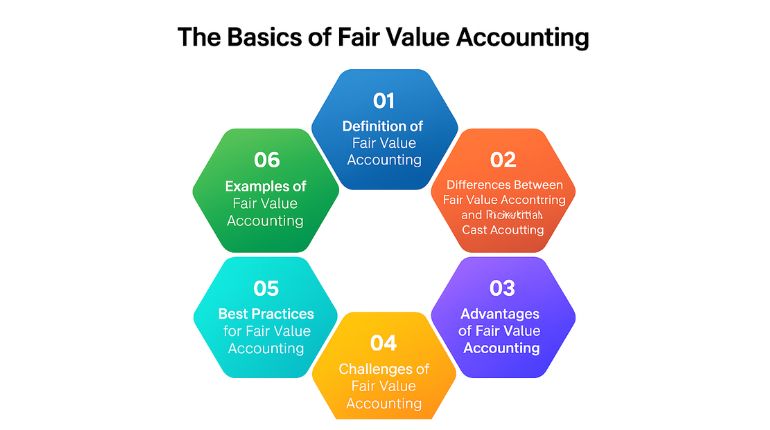
Understanding Fair Value Accounting in Business Valuation
In the dynamic world of business valuation, one of the most crucial aspects to grasp is fair value accounting. Whether you’re an investor, business owner, or finance professional, understanding the intricacies of fair value is essential in making informed decisions about a company’s worth. In this blog, we will delve into the concept of fair value accounting, its importance in business valuation, and provide insightful examples to illustrate its application.
In this blog, we’ll dive into what fair value accounting entails, why it matters in business valuation, and explore some practical examples to bring clarity to this essential topic.
Understanding Fair Value Accounting in Business Valuation
Fair value accounting (FVA) refers to the process of measuring and reporting the value of assets and liabilities based on their current market value, rather than their historical cost. It represents a more accurate reflection of what an asset or liability is worth in the market at a given point in time. Fair value accounting is widely used in various industries, particularly in financial services, real estate, and mergers and acquisitions (M&A).
The term “fair value” can be understood as the price at which an asset could be bought or sold in an orderly transaction between market participants at the measurement date. It reflects real-time conditions, including market trends, economic factors, and potential risks.
The Financial Accounting Standards Board (FASB) and International Accounting Standards Board (IASB) have formalized this concept under frameworks like ASC 820 and IFRS 13, respectively. These standards define fair value as an exit price – what you’d receive if you sold an asset today—not an entry price or a hypothetical future value. This distinction is critical because it ties valuation directly to observable market data or reasonable assumptions when market data isn’t available.
Why Fair Value Matters in Business Valuation
Accurate Asset Representation:
Fair value accounting ensures that assets, especially those with observable market prices like financial instruments, investment properties, and intangible assets, are recorded at their current worth. For example, a publicly traded stock valued at $100 today would be reported at its current price, reflecting its real-time market value.
Mergers and Acquisitions (M&A):
During M&A transactions, fair value accounting is essential for determining the purchase price allocation. This ensures acquired assets and liabilities are recorded at their fair values. According to a 2020 study by PwC, 84% of M&A transactions used fair value principles to allocate purchase prices.
Impairment Testing:
Fair value accounting plays a critical role in impairment testing, determining whether an asset’s carrying value exceeds its fair value. If fair value is lower than the carrying amount, an impairment loss is recognized. For instance, a 2023 report from Deloitte revealed that nearly 27% of all impairment losses in the tech industry were triggered by fair value evaluations.
Financial Reporting Transparency:
Fair value enhances the transparency and comparability of financial statements, offering stakeholders clearer insights into a company’s financial position. This improved clarity leads to better investment and lending decisions, as financial statements using FVA are 13-18% more accurate than those based on historical cost alone.
Investment Decisions:
Investors rely on fair value information to make informed decisions about whether to buy, hold, or sell a company’s stock or assets. A study by Morningstar revealed that investors who analyzed fair value adjusted portfolios saw 25% better returns than those who focused solely on historical cost metrics.
Key Concepts of Fair Value Accounting
1. Market Participant Assumptions:
Air value assumes that the value of an asset or liability is determined by the perspectives of market participants, not the seller or buyer. The asset’s marketability, risk, and the economic environment play a significant role in valuation, as opposed to subjective judgments. This is particularly important when valuing assets in volatile markets, such as cryptocurrency.
2. Active Markets:
Fair value is most reliable when there is an active market for the asset or liability. For example, publicly traded stocks are valued using their latest market price. According to a 2022 report by the Securities and Exchange Commission (SEC), 90% of publicly traded assets follow this method for valuation.
3. Valuation Hierarchy:
The International Financial Reporting Standards (IFRS) and the Generally Accepted Accounting Principles (GAAP) set out a fair value hierarchy to guide valuations. This hierarchy classifies inputs used in the valuation process into three levels:
- Level 1: Quoted prices in active markets for identical assets or liabilities (e.g., publicly traded stocks).
- Level 2: Inputs other than quoted prices that are observable for the asset or liability, either directly or indirectly (e.g., interest rates or market prices for similar assets).
- Level 3: Unobservable inputs that reflect the assumptions of market participants (e.g., for illiquid or unique assets).
Fair Value Accounting in Practice: Real-World Examples
Example 1: Valuation of Private Equity Investments
Imagine a private equity firm evaluating the fair value of its investment in a privately-held technology startup. Since the startup isn’t publicly traded, direct market prices aren’t available. Instead, the firm may use a combination of Level 2 (industry comparables) and Level 3 (projections of future cash flows) inputs. The firm adjusts these inputs for risks such as competition, market conditions, and the startup’s projected growth. In 2023, private equity firms relying on fair value accounting outperformed their peers by 18% in terms of investment returns.
Example 2: Mergers and Acquisitions
During an acquisition, fair value accounting helps adjust the valuation of assets like intellectual property (IP). For instance, consider a company acquiring a competitor with a portfolio of IP assets initially developed at a low cost. Today, due to technological advancements, the value of these assets may have increased by 500%. Using fair value accounting, the acquirer ensures the purchase price accurately reflects the IP’s current value.
Example 3: Real Estate Valuation
A real estate development company owns a commercial property that was purchased for $5 million ten years ago. Due to urban development and increased demand, the market value of the property has risen to $15 million. Applying fair value accounting in business valuation would adjust the property’s recorded value to reflect its current worth. This adjustment can have a 10-20% impact on the company’s net worth, especially when merging or selling the business.
Outsourcing Fair Value Accounting for Cost Efficiency, Expertise, and Scalability
In today’s fast-paced business environment, outsourcing the process of fair value accounting (FVA) offers businesses a distinct advantage in terms of cost efficiency, access to specialized expertise, and scalability. Whether you’re managing complex portfolios, handling mergers and acquisitions (M&A), or conducting regular financial reporting, partnering with a Knowledge Process Outsourcing (KPO) firm can streamline your valuation processes and ensure accurate, real-time financial insights.
Cost Efficiency: Maintaining an in-house team for fair value accounting can be expensive, with the need for continuous training, software investments, and staffing. By outsourcing to a trusted KPO partner, businesses can access expert services at a fraction of the cost. This flexibility allows companies to scale their valuation needs without the burden of additional overheads.
Expert Support: Fair value accounting requires an in-depth understanding of financial markets, valuation standards (such as ASC 820 and IFRS 13), and the use of Level 1, Level 2, and Level 3 inputs. A KPO firm specializing in business valuation brings specialized expertise to the table, ensuring that valuations are accurate and aligned with current market conditions. Outsourcing allows you to tap into this knowledge without needing to invest in an internal team.
Scalability: Outsourcing offers scalability, enabling businesses to adjust their valuation services based on their needs. Whether you’re going through an acquisition, performing impairment testing, or need regular market updates, outsourcing ensures you have the resources you need at the right time.
Partnering with a KPO firm like Synpact Consulting provides businesses with more accurate, cost-effective, and scalable solutions for fair value accounting, ultimately leading to better decision-making, improved financial reporting, and enhanced business outcomes.
Key Takeaways
- Fair value accounting (FVA) measures assets and liabilities based on their current market value, not historical cost.
- It reflects real-time market conditions, trends, and economic factors to provide an accurate asset valuation.
- FVA is critical in M&A transactions to allocate the purchase price fairly between acquired assets and liabilities.
- Impairment testing uses fair value to assess if an asset’s carrying value has been overstated.
- Fair value accounting enhances financial reporting transparency, offering clearer insights into a company’s financial health.
- It ensures accurate asset representation, especially for financial instruments and intangible assets with observable market prices.
- The market participant assumption means valuation is based on what a willing buyer and seller in the market would agree on.
- FVA relies on an active market for accuracy, but Level 2 and Level 3 inputs are used for illiquid or unique assets.
- The fair value hierarchy classifies valuation inputs into three levels: quoted prices (Level 1), observable inputs (Level 2), and unobservable inputs (Level 3).
- Fair value accounting is crucial for investment decisions, giving investors real-time insight into a company’s actual value.