
Understanding the Basics of Plain Vanilla Bond Valuation
What is Plain Vanilla Debt?
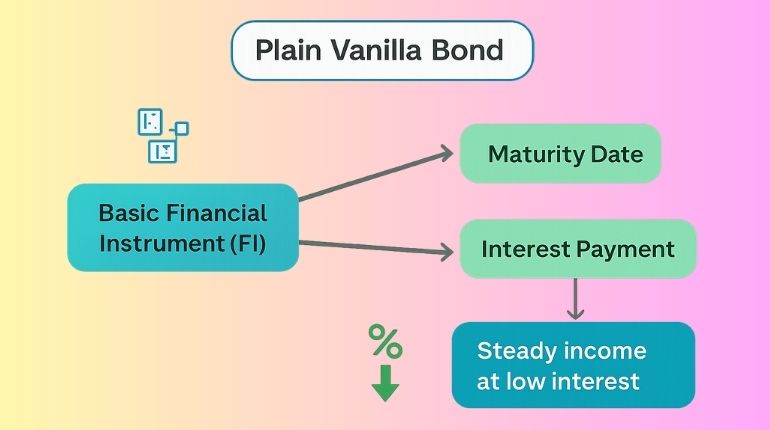
Plain vanilla debt refers to a straightforward debt instrument that typically has:
- Fixed coupon payments: Regular interest payments made at predetermined intervals (e.g., annually, semi-annually).
- Face value (par value): The principal amount that is paid back to the bondholder at maturity.
- Maturity date: The date on which the face value is repaid.
For example, a 5-year bond with a $1,000 face value and a 5% annual coupon would pay $50 in interest every year for five years, and $1,000 would be repaid at the end of year 5.
Key Variables in Debt Valuation
- Face Value (FV): The amount that will be paid back at maturity.
- Coupon Rate (C): The annual interest rate expressed as a percentage of the face value.
- Coupon Payment (PMT): The dollar amount of the periodic interest payments, which is the face value multiplied by the coupon rate.
- Discount Rate (r): The interest rate or required rate of return used to discount future cash flows. It is often based on the yield to maturity (YTM).
- Time to Maturity (T): The number of periods (usually years) until the bond matures.
Steps Involve in Debt Valuation
1. Determine the Coupon Payment
If the bond pays regular coupon payments, determine the coupon amount based on the coupon rate and face value.
Coupon Payment (PMT)=Coupon Rate (C)×Face Value (FV)
For example, if the coupon rate is 5% and the face value is $1,000:
Coupon Payment=0.05×1000=50
This means the bond will pay $50 annually.
2. Select the Appropriate Discount Rate (r)
The discount rate represents the required rate of return by the market. For simplicity, the discount rate might be based on the bond’s yield to maturity (YTM), which is the rate that equates the bond’s price to the present value of its future cash flows.
If the market discount rate differs from the coupon rate, the bond will either trade at a premium (if the coupon rate is higher than the discount rate) or at a discount (if the coupon rate is lower than the discount rate).
3. Calculate the Present Value of Coupon Payments
The present value of the coupon payments can be calculated using the formula for the present value of an annuity:
PV coupons = sum of {PMT1/(1+r)^1 + PMT2/(1+r)^2 + … PMTn/(1+r)^n}
Where:
PMT = Coupon Payment
r = Discount rate (annual)
T = Time to maturity (in years)
This formula calculates the present value of all future coupon payments. It’s essentially the value of an annuity.
4. Calculate the Present Value of the Face Value
The face value is repaid in a lump sum at maturity. To find the present value of the face value, you simply discount it to the present using the discount rate and the number of periods until maturity.
PV = FV(1+r)^T
Where:
FV = Face value (principal)
r = Discount rate (annual)
T = Time to maturity (in years)
5. Add the Present Values of Coupons and Face Value
The total price (present value) of the bond is the sum of the present value of the coupon payments and the present value of the face value.
P = PV(coupons) + PV(face value)
This gives the bond’s value at the current time.
6. Account for Coupon Payment Frequency
If the bond pays coupons more frequently than annually (e.g., semi-annually), adjustments need to be made:
- Divide the coupon rate by the number of periods per year.
- Divide the discount rate by the number of periods per year.
- Multiply the number of years to maturity by the number of periods per year.
For example, for a bond with a 5% annual coupon rate, if it’s paying semi-annually:
- The coupon rate per period would be 2.5% (5% ÷ 2).
- The number of periods to maturity would be doubled (e.g., 5 years × 2 = 10 periods).
- The discount rate per period would be halved.