
Valuation for Startup: Navigating Through Uncertainty
Valuing a startup is a complex process that involves various factors and considerations. The process of startup valuation is not only about numbers; it’s about understanding the company’s potential for growth, the risks involved, and the larger market dynamics. Startups typically operate in a realm of uncertainty – uncertain revenue, uncertain market demand, and often uncertain profitability. Yet, accurate valuation is crucial for attracting investors, securing funding, and guiding strategic decision-making.
Understanding Startup Valuation
Startup valuation is the process of determining the worth or value of a startup company. The value of a startup is typically based on its future potential, growth prospects, and ability to generate revenue. Startup business valuation is crucial for entrepreneurs and investors as it helps them understand the worth of a company and make informed decisions.
Why is Startup Valuation So Challenging?
Unlike established businesses, startups lack historical financial data, which makes traditional valuation methods – like the Discounted Cash Flow (DCF) model or Comparable Company Analysis (CCA) – difficult to apply effectively. Moreover, startups typically don’t have the predictable cash flows or profitability that seasoned companies offer, which complicates the valuation process further. Several factors contribute to the complexity of valuing a startup:
- Lack of financial history: Startups usually have limited financial data, especially in the early stages. They might still be working on product development, testing the market, or trying to achieve initial sales.
- High risk and uncertainty: Startups, by their very nature, face considerable risks. The uncertainty surrounding their long-term sustainability or ability to scale is often the biggest challenge for investors.
- Potential for rapid growth: Unlike mature businesses, startups can experience exponential growth. However, predicting how quickly that growth will materialize is difficult to gauge, and valuing a business on the assumption of future growth can introduce a significant amount of guesswork.
Factors Affecting Startup Valuation
Several factors affect the valuation of a startup, including:
Stage of Development:
The stage (Idea Stage, Seed Stage, Growth Stage etc.) at which a startup is in its lifecycle plays a significant role in determining its value.
Market Size and Opportunity:
A startup’s potential for growth is closely tied to the size and attractiveness of the market it operates in. A startup operating in a high-growth, large-scale market – such as AI, healthcare, or renewable energy – tends to have a higher valuation due to its potential to capture significant market share. In contrast, a startup addressing a niche or stagnant market may face slower growth and, therefore, a lower valuation.
Revenue and Profitability:
While startups typically focus on growth rather than immediate profitability, investors still consider the startup’s revenue and its trajectory. A startup that is already generating consistent revenue, even if not yet profitable, will often be valued higher than one that is still in the pre-revenue stage.
Team and Founders’ Experience:
The strength and experience of the founding team are often regarded as one of the most significant factors in the valuation of a startup. A team with a proven track record of success, especially in building and scaling startups, instills confidence in investors.
Customer Traction and Retention:
Customer acquisition and retention metrics are critical in understanding a startup’s value. Investors look at factors like Customer base, Customer Lifetime Value and Churn Rate.
Key Approaches to Startup Valuation
Although startup valuation can be challenging, there are a few common methodologies used to arrive at a reasonable figure. Each method has its strengths and weaknesses, depending on the startup’s stage, industry, and the data available.
The Market Comparable Method:
The Market Comparable Method involves comparing the startup to other similar companies in the same industry or sector that have recently been valued or sold. This approach is often used in sectors like tech, biotech, and SaaS (Software as a Service), where companies are at similar stages of development.
The Risk-Adjusted Return Method:
In situations where cash flow is unpredictable, the Risk-Adjusted Return Method can be more suitable. This method is based on estimating what return on investment (ROI) an investor would expect to receive, given the startup’s risks. Investors typically adjust the expected return to account for the specific risks associated with the startup – such as management quality, market size, competition, and product adoption.
The Scorecard Method:
The Scorecard Method is one of the most popular techniques for valuing pre-revenue startups, especially in seed-stage investments. This method involves assigning weight to several key factors that can influence the startup’s success, such as the strength of the management team, product development progress, market size, competition, and intellectual property. A scorecard allows investors to compare a startup’s potential with the average startup in the same industry and stage. This can give a more nuanced and flexible approach to valuation.
The Venture Capital Method:
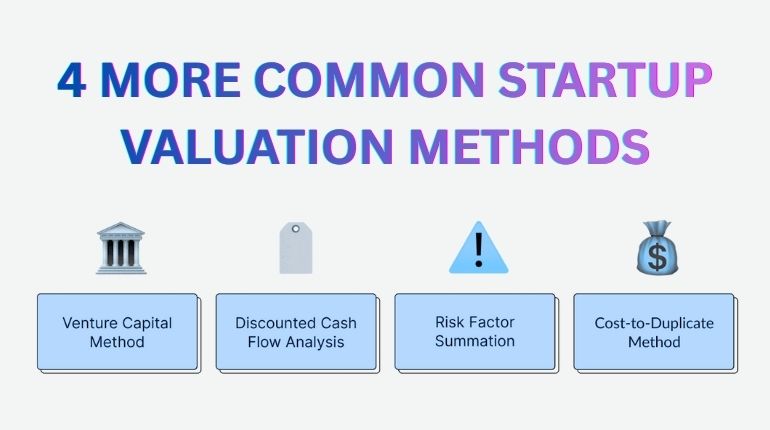
The Venture Capital Method is another widely used approach, particularly in cases where the startup is in its early stages but has an exit strategy (such as being acquired or going public) in mind. This method estimates the startup’s future exit value based on projected earnings or revenue and then works backward to determine its current value by applying an expected return on investment.
The exit value often takes into account the multiple of revenue or EBITDA that companies in the same sector or market can be sold for. The discount rate applied to calculate the present value reflects the high risk associated with early-stage startups.
Understanding the Role of Uncertainty in Startup Valuation
Despite the various valuation methods, all startup valuations are inherently speculative to some extent. The lack of historical data, unpredictable cash flows, and fluctuating market conditions all contribute to a sense of uncertainty. However, successful investors don’t shy away from this uncertainty – they embrace it.
Conclusion
Valuing a startup is more art than science, but that doesn’t mean it’s a process devoid of structure or rigor. By combining the right valuation methods with a deep understanding of the startup’s potential, the industry, and the inherent uncertainties, professionals can arrive at a reasonable, defendable valuation. Whether you’re an investor looking to make informed decisions or an entrepreneur seeking to understand your company’s worth, navigating through the uncertainty of startup valuation requires both strategic thinking and a thorough understanding of the market landscape.
As a business valuation offshoring agency in India, we specialize in helping startups and investors navigate these challenges, providing tailored valuation services that reflect the true potential of your business in the face of uncertainty. Understanding the complexities of startup valuation is the first step towards making informed, successful decisions in today’s dynamic market environment.
How Outsourcing Startup Valuation Services Can Benefit Your Business
- Cost Efficiency: Valuing a startup requires access to a wealth of market data, financial expertise, and industry knowledge. However, building an in-house team of specialists or subscribing to expensive financial databases can be cost-prohibitive for many startups. By outsourcing valuation services to a KPO firm, you gain access to seasoned professionals who already have the tools, resources, and knowledge to perform accurate startup valuations. This can reduce operational costs, freeing up your internal resources for other strategic areas while ensuring that you receive expert-driven insights at a fraction of the cost of doing it in-house.
- Expert Support: Navigating through the uncertainty of startup valuation requires expertise in various valuation methodologies, such as the Risk-Adjusted Return Method, Scorecard Method, and Venture Capital Method. Outsourcing to a KPO firm with specialized financial analysts ensures that your business receives high-quality, accurate, and reliable valuations. These experts understand the nuances of startup valuation, including risk management, market opportunity assessment, and growth potential evaluation, providing you with the confidence that your valuation is grounded in solid analysis.
- Scalability: As your startup evolves and grows, your valuation needs may fluctuate depending on your stage of development or market conditions. A KPO firm offers the flexibility to scale services according to your changing requirements. Whether you’re seeking a detailed valuation during fundraising rounds, or you need to reassess your company’s worth as you approach a new stage of growth, outsourcing ensures that you can access scalable and adaptable valuation support. This scalability ensures that you have the necessary resources at each critical stage of your startup’s journey.
By leveraging the power of outsourcing for startup valuation, your business can benefit from cost-effective, expert-driven services that provide scalable support at every stage of growth. At our KPO Firm Synpact Consulting, we specialize in offering tailored valuation services that help startups and investors make well-informed decisions, navigating through the uncertainty with confidence. Let us help you unlock the true value of your startup, paving the way for successful investments and strategic decision-making.