
The Role of Supply Chain in Enhancing Business Value
In today’s increasingly competitive global marketplace, businesses are constantly looking for ways to enhance their value. While numerous factors contribute to a company’s overall worth, one key element that is often overlooked is the supply chain. A well-optimized and efficient supply chain not only helps businesses deliver products to customers in a timely and cost-effective manner but also plays a pivotal role in enhancing long-term business value.
In this blog, we’ll explore how the supply chain can contribute to the overall value of a business, drawing upon real-world examples to illustrate its impact.
The Supply Chain: A Critical Driver of Business Value
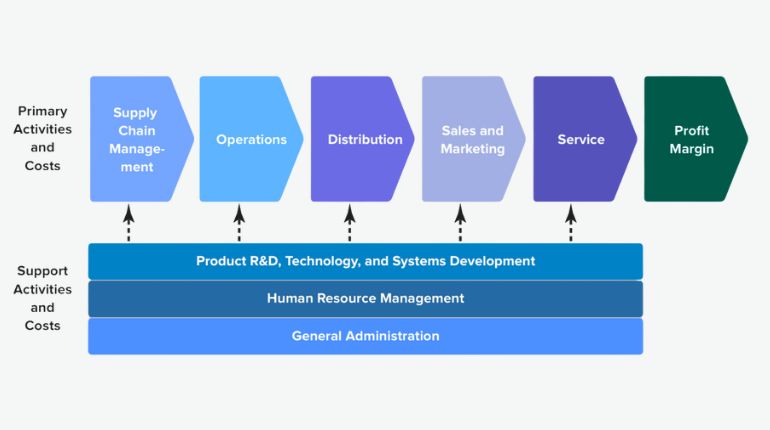
At its core, a supply chain is the network of entities, processes, and activities involved in the creation and delivery of a product or service, from the initial stages of raw material procurement to the final delivery to customers. A streamlined and efficient supply chain enables businesses to reduce costs, improve customer satisfaction, and increase profitability – ultimately boosting the company’s overall value.
1. Cost Reduction and Profitability
One of the most significant ways in which supply chain optimization impacts business value is through cost reduction. Efficient procurement, logistics, and inventory management can all contribute to lower operational costs, directly boosting the bottom line.
Example: Walmart’s Supply Chain Efficiency
Walmart, one of the largest retail chains in the world, is a prime example of a company that has leveraged its supply chain to enhance business value. The company’s supply chain is known for its emphasis on efficiency, with its central distribution system allowing for significant economies of scale. By negotiating bulk purchases, maintaining tight control over inventory, and employing advanced forecasting techniques, Walmart is able to reduce operational costs. These savings are passed on to customers, driving revenue growth and enhancing overall business value.
2. Improved Customer Experience
In today’s business environment, customer satisfaction is paramount. A well-managed supply chain ensures that products are available when customers need them, reducing stockouts and delays. This contributes to higher customer satisfaction and retention, which in turn increases the perceived value of the company.
Example: Apple’s Supply Chain Excellence
Apple’s supply chain is a well-known example of how strategic management of supply chain operations can improve the customer experience. The tech giant’s ability to launch new products on time and meet high consumer demand is a testament to the power of its supply chain. Apple’s integrated approach to managing suppliers, logistics, and distribution ensures that its products are readily available in stores and online, enhancing the customer experience and maintaining brand loyalty.
3. Risk Mitigation
A well-structured supply chain can also help businesses mitigate risks associated with market fluctuations, natural disasters, or geopolitical uncertainties. By diversifying suppliers, establishing contingency plans, and building resilient logistics networks, companies can reduce the impact of external disruptions.
Example: Toyota’s Just-in-Time Supply Chain
Toyota’s approach to supply chain management, particularly its just-in-time (JIT) system, is an example of how risk mitigation can enhance business value. JIT focuses on reducing inventory levels by ensuring that components arrive exactly when needed in the manufacturing process. While this approach minimizes costs, it also requires a highly reliable and flexible supply chain that can adapt quickly to unforeseen disruptions, such as changes in demand or delays in shipping. Toyota’s ability to manage its supply chain risks has been crucial in maintaining production continuity and sustaining its market position.
4. Innovation and Competitive Advantage
An efficient supply chain can be a source of innovation, offering companies the opportunity to develop new products, enter new markets, or reduce the time to market for new offerings. Furthermore, companies with superior supply chains often have a competitive advantage, as they are better positioned to respond quickly to market changes.
Example: Amazon’s Supply Chain Innovation
Amazon has set a new standard for supply chain innovation, particularly with its use of advanced technologies like robotics, AI, and machine learning. The company’s ability to innovate its supply chain operations has allowed it to scale rapidly and offer services such as next-day delivery and same-day shipping. Amazon’s vast fulfillment network, driven by technological advancements, has created a significant competitive advantage, solidifying its dominance in the e-commerce space and contributing to its business value.
5. Sustainability and Brand Reputation
In an era where sustainability is becoming increasingly important, businesses that prioritize eco-friendly supply chain practices can enhance their reputation and attract environmentally conscious consumers. Green supply chains that focus on reducing waste, optimizing energy use, and sourcing sustainably produced goods not only help the environment but also contribute to a company’s long-term value.
Example: Unilever’s Sustainable Supply Chain
Unilever, a multinational consumer goods company, has integrated sustainability into its supply chain as a means of enhancing business value. The company’s commitment to sourcing raw materials sustainably, reducing carbon emissions, and minimizing waste has helped improve its brand image and appeal to a growing segment of environmentally conscious consumers. By aligning its supply chain practices with broader corporate social responsibility (CSR) goals, Unilever has not only contributed positively to the environment but also gained a competitive edge in the marketplace.
Outsourcing to Enhance Supply Chain Efficiency: A Strategic Advantage
Outsourcing specific aspects of your supply chain to a Knowledge Process Outsourcing (KPO) firm like Synpact Consulting offers several strategic benefits, particularly in enhancing operational efficiency, reducing costs, and driving scalability. By leveraging specialized expertise from KPO providers, businesses can gain access to skilled professionals with deep knowledge of supply chain management without the need for in-house training or extensive overhead costs. This expert support helps streamline operations, optimize logistics, and ensure that industry best practices are consistently followed, which in turn drives cost savings and enhances service delivery.
Furthermore, outsourcing allows businesses to scale quickly without the need to invest in additional infrastructure or human resources. As market demands fluctuate, KPO firms can provide flexible solutions that adapt to changing needs, ensuring that companies remain responsive and agile in a competitive environment. For companies looking to focus on their core competencies, outsourcing supply chain management functions to a trusted KPO partner enables them to offload time-consuming processes and improve overall business value. With the right partner, businesses can foster growth, reduce risks, and stay ahead in an ever-evolving market.
Key Takeaways
- An optimized supply chain reduces operational costs, directly boosting profitability.
- Efficient supply chain management enhances customer satisfaction and loyalty.
- A streamlined supply chain helps mitigate risks from market fluctuations and disruptions.
- Companies with strong supply chains can innovate faster and gain a competitive advantage.
- Supply chain efficiency improves time-to-market for new products and services.
- A resilient supply chain is essential for maintaining business continuity during crises.
- Sustainability in supply chains strengthens a company’s brand and attracts eco-conscious consumers.
- Advanced technologies in supply chains, like AI and robotics, drive operational efficiency and growth.
- Risk diversification in the supply chain reduces the impact of external disruptions.
- Strong supply chain practices are key to enhancing long-term business value and market positioning.